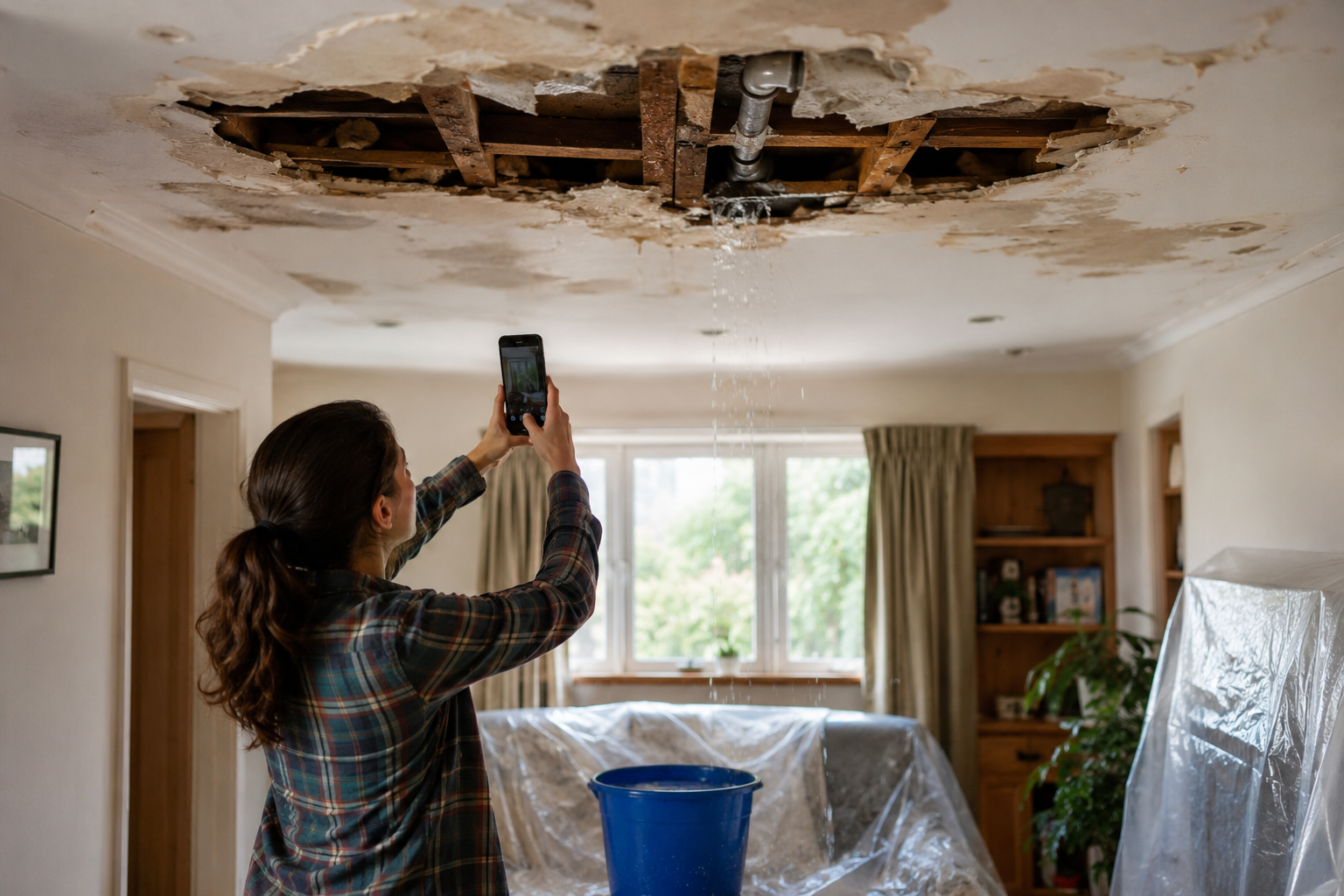
Property damage can happen without warning. Whether it’s a burst pipe, storm damage, roof leak or accidental flooding, the first 24 hours are often the most important when it comes to protecting your home, reducing further damage, and supporting a successful insurance claim.
For homeowners across Dorset, knowing what steps to take immediately after property damage can make the recovery process far less stressful.
Prioritise Safety First
Before assessing any damage, make sure the property is safe to enter.
Depending on the situation, you may need to:
- Turn off the water supply.
- Isolate electricity in affected areas.
- Avoid unstable ceilings or structures.
- Stay clear of standing water near electrics.
- Contact emergency services if there is fire, severe flooding or structural risk.
If the property is unsafe, leave immediately and seek professional advice before re-entering.
Stop Further Damage Where Possible
Insurance providers expect homeowners to take reasonable steps to prevent additional damage after an incident occurs.
This might include:
- Placing buckets under leaks.
- Using temporary coverings on damaged roofs.
- Turning off water systems.
- Moving furniture and valuables away from affected areas.
- Ventilating the property if safe to do so.
Temporary mitigation is important, but permanent repairs should usually wait until the damage has been assessed and documented.
Document Everything
One of the most important steps in the first 24 hours is gathering evidence for your insurance claim.
Take clear photographs and videos of:
- The source of the damage.
- Affected rooms and contents.
- Structural damage.
- Water ingress.
- Damaged flooring, walls, ceilings and belongings.
Keep records of:
- Emergency repair invoices.
- Temporary accommodation costs.
- Communication with insurers or contractors.
- Dates and times of incidents.
Detailed documentation can help prevent delays during the claims process.
Contact Your Insurance Provider
Notify your insurer as soon as possible after discovering the damage.
Most insurers will ask for:
- Your policy number.
- Details of the incident.
- Photographs of the damage.
- A timeline of events.
- Information about emergency mitigation already completed.
In some cases, insurers may appoint a loss adjuster to inspect the property and assess the required repairs.
What Happens After a Leak?
Water damage is one of the most common property insurance claims in the UK.
After a leak or burst pipe:
- Stop the water supply immediately.
- Contact a professional repair company.
- Begin emergency drying and mitigation.
- Remove excess water where possible.
- Monitor for signs of damp or mould.
Even small leaks can cause hidden damage behind walls, under flooring and within ceilings if not properly addressed. Professional drying equipment and moisture testing are often required before reinstatement works can begin.
Emergency Roof Repairs After Storm Damage
Strong winds and storms can quickly damage roofs, gutters, chimneys and external structures.
If your roof has been damaged:
- Avoid climbing onto the roof yourself.
- Arrange emergency temporary protection.
- Photograph visible damage from ground level if possible.
- Check loft spaces for water ingress.
- Contact emergency repair specialists promptly.
Fast temporary repairs can help prevent further internal water damage while permanent reinstatement works are arranged.
Who Pays for Temporary Accommodation?
If the property becomes uninhabitable due to insured damage, your policy may include temporary accommodation cover.
This can sometimes include:
- Hotel stays.
- Rental accommodation..
- Storage costs.
- Additional living expenses.
However, cover levels and conditions vary between policies, so it’s important to confirm this directly with your insurer before making arrangements. Keeping receipts and written approval where possible can help avoid disputes later.
Avoid Starting Major Repairs Too Early
Although it can be tempting to begin repairs immediately, insurers may need to inspect the damage before authorising permanent works.
Emergency mitigation is usually acceptable, but major reinstatement should normally wait until:
- The claim has been logged.
- Damage has been assessed.
- Insurer approvals have been confirmed.
Starting unauthorised repairs too early can sometimes complicate the claims process.
Working With Repair and Claims Specialists
Managing property damage can quickly become overwhelming, especially when coordinating insurers, drying specialists, contractors and temporary accommodation.
Professional claims management and repair companies, like Avoca Group, can help with:
- Emergency response.
- Damage assessments.
- Mitigation works.
- Drying and moisture monitoring.
- Repair scheduling.
- Communication with insurers and loss adjusters.
- Full reinstatement works.
Having experienced support in place can help restore your property more efficiently while reducing stress during an already difficult situation.
The first 24 hours after property damage are critical. Acting quickly, documenting everything and arranging professional support can help minimise disruption and protect both your property and your insurance claim.
Whether you’re dealing with water damage, storm impacts or emergency repairs, taking the right steps early on can make the recovery process significantly smoother for homeowners across Dorset.